
The LEGO® fire station has been rebuilt every few years since 1957. It began as a white and red garage with no figures at all, turned into a yellow station with a clock tower when the minifigure arrived in 1978, went red in the 1980s, took to the air with a rooftop helicopter in 1990, and now comes with a drone. Here is every big one, starting with today’s and going back to the one you might remember.
Every fire station, one swipe at a time
Swipe back through the years, or tap the line of years above the cards. The line is drawn to scale, so the long gaps between stations show.
Back through the years
2024
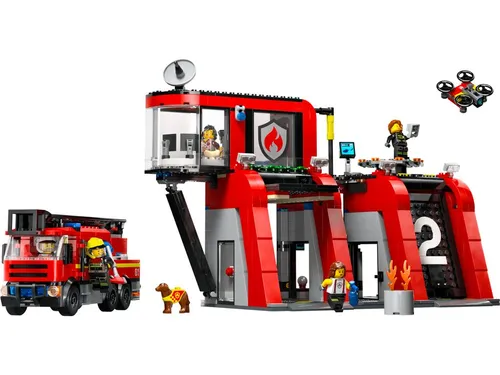
Fire Station with Fire Truck
The newest big station: sweeping red arches, a lookout room, a dog, and a drone hovering overhead. A long way from the 1957 box.
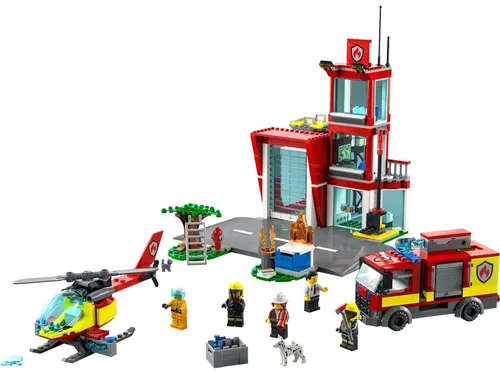
Fire Station
Built around the rescue: a small fire to put out by the door, a helicopter and an engine. It has exactly as many pieces as the 1990 Fire Control Center.
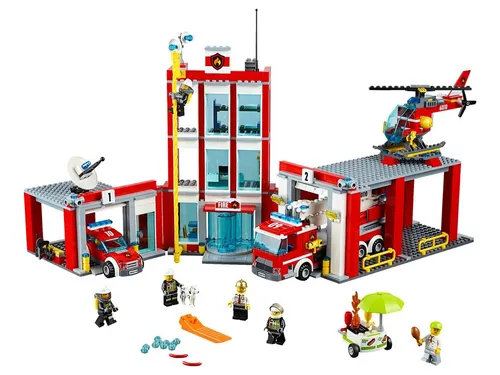
Fire Station
The biggest City fire station of all, at 920 pieces: a tall tower, two numbered bays and a helicopter on its own roof.
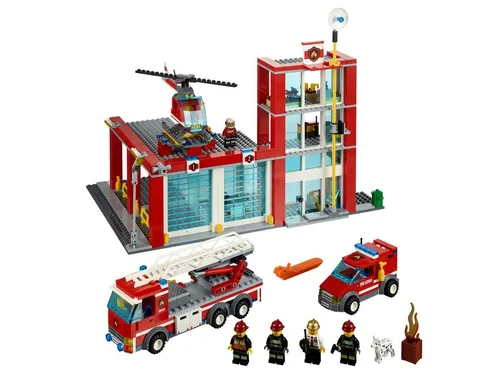
Fire Station
Glass doors you can see the engines through, a helicopter on the roof, and a crew big enough to fill both.
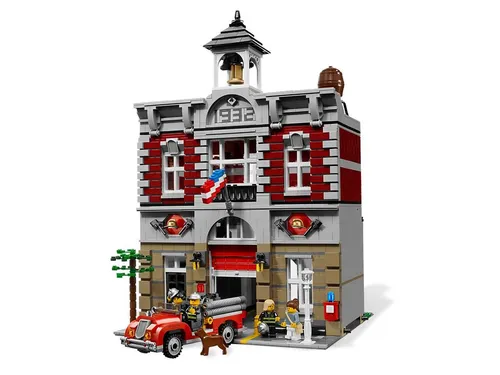
Fire Brigade
One of the first four modular buildings, made to stand in a street with the others. A gold bell in the tower, a water barrel on the roof and an old engine at the door. Long retired, so sold second-hand.
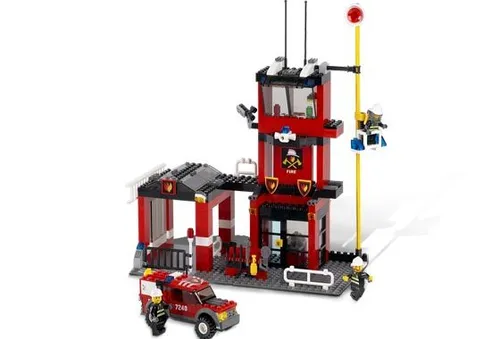
Fire Station
The first fire station sold under the City name, which every one since has carried. A tall, narrow tower and a small red car, with a firefighter climbing the yellow pole.
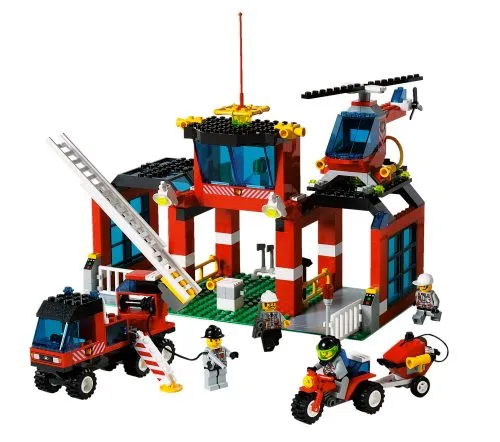
Fire Fighters’ HQ
Busier and darker, with black alongside the red. A helicopter, a long ladder and a quad bike, in a set less than half the size of the one before it.
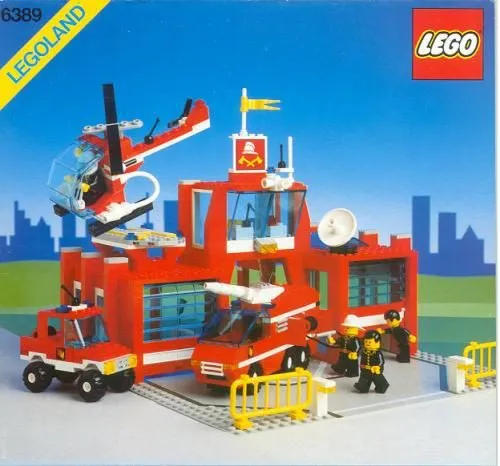
Fire Control Center
The fire station gains a floor and takes to the air: a helicopter on the roof, a radar dish, and a city skyline painted behind. The biggest so far.
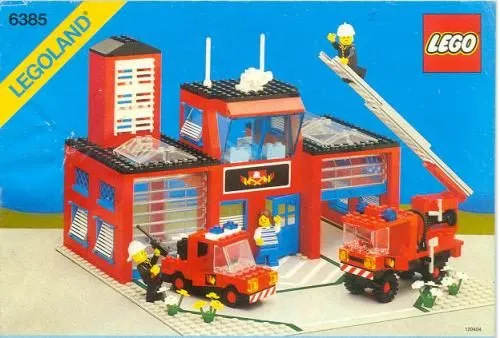
Fire House
Bigger windows, a lookout tower, a flame badge over the door, and a ladder truck with a firefighter at the very top.
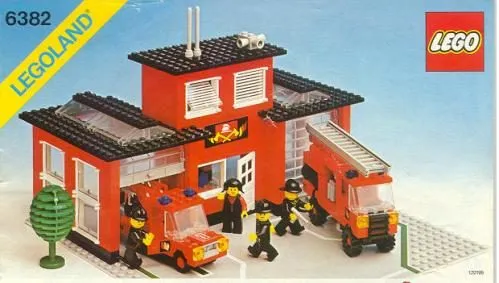
Fire Station
The station turns red, and stays red from here on. Clear roof panels, open bays and a ladder truck almost as long as the building.
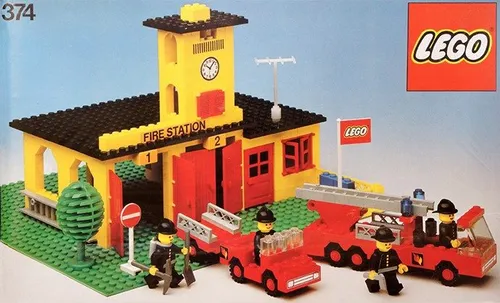
Fire Station
The one many people remember. A yellow station with a clock in its tower and two numbered red doors, and new that year, minifigures: firefighters in black, ready to drive.
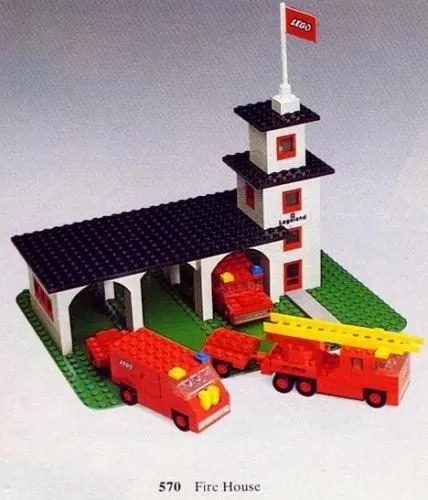
Fire House
A white tower with a flag on top, a long black roof and three red engines lined up on green. Still nobody to drive them.
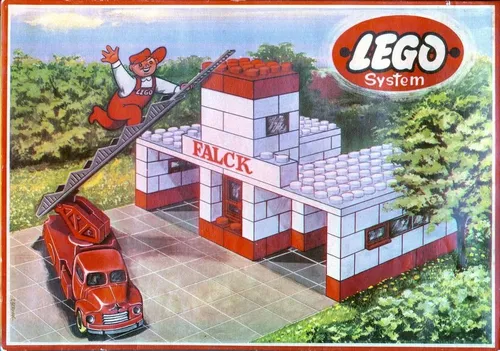
Fire Station
The name over the doors is Falck, a Danish rescue service. The painted firefighter on the ladder is the only person in sight: figures to play with were still twenty years away.
Some sets link to Amazon. As an Amazon Associate, BrickSorter earns from qualifying purchases.
What changed, decade by decade?
The 1950s to the 1970s were about the building and the engines. There was nobody in them: the early fire stations have no figures at all.
1978 changed everything. The minifigure arrived, and the fire station became somewhere to play out a story rather than a model to look at. That yellow station with the clock tower is the one many people picture first.
The 1980s settled the look: red walls, clear roof panels and a ladder truck parked out front. The boxes had a yellow banner across the top corner, which is often the first thing people recognise.
The 1990s and 2000s went bigger and higher, with helicopters, radar dishes and painted cities on the box. From 2005 the fire station was part of the City range, and it has had a new version every two or three years since.
From 2009 there were two kinds: the City station, made to be played with, and the Fire Brigade, a detailed building made to be displayed in a street of others.
How big did they get?
The pieces tell the story. The 1957 station had 108. The 1978 classic had 338. The biggest City station, from 2016, has 920, and the 2009 Fire Brigade has 2,236, more than twenty times the first one. The little bar on each card shows each set’s size against the biggest in the row.
Can you still build the one you had?
Probably, if you kept the bricks. Most old sets were never lost. They were taken apart, mixed into one big tub with everything else, and put away. Every piece is still there, just not together.
A set’s parts list says exactly which pieces it needs, in which colours, so a station can be sorted back out of the pile, one set at a time. How to sort a mixed pile back into sets shows how to do it by hand, and missing pieces in an old set covers what to do about the few that have really gone.
BrickSorter does the list work for you. You add the sets you own by their numbers, such as 374 or 6385, give each one a lettered tub, and the app shows one piece at a time and tells you which tub it goes in. It is coming to the App Store and Google Play.
Questions people ask
What was the first fire station set? The earliest LEGO® fire station in the parts databases is set 1308, from 1957. It was a white and red garage with a fire engine, and no figures.
When did fire stations get minifigures? In 1978, with set 374, the yellow Fire Station with the clock tower. The minifigure was introduced that year.
Which fire station has the most pieces? The 2009 Fire Brigade (set 10197), with 2,236. Of the City stations, the 2016 Fire Station (set 60110) is the biggest, with 920.
Can I rebuild an old set without the instructions? Yes. Each set’s parts list and instructions can be found by its number, and the pieces can be sorted back out of a mixed tub.